
Have you ever wondered why, in some of the world’s wealthiest nations, so many struggle to make ends meet? Wealth inequality in Western countries is not just a political catchphrase; it’s a reality that affects millions. But what is wealth inequality, and why does it matter?
The Current State of Wealth Inequality
Recent studies reveal a startling picture: the richest 1% in many Western countries hold more than 40% of the wealth. This gap has widened significantly in the past few decades, fueled by various economic and policy changes. For instance, while a CEO in the 1970s might have earned 30 times the salary of their average employee, today, that figure is closer to 300 times.
But numbers alone don’t tell the whole story. Consider Sarah, a single mother working two jobs in New York, barely making enough to cover rent and basic necessities. Contrast her life with that of a billionaire living just a few blocks away, and the stark reality of wealth inequality becomes evident. Or does it? Arguably this is the benefit of a capitalist society, where people of all wealth classes can live a few blocks away from one another – and not some dystopian castle.
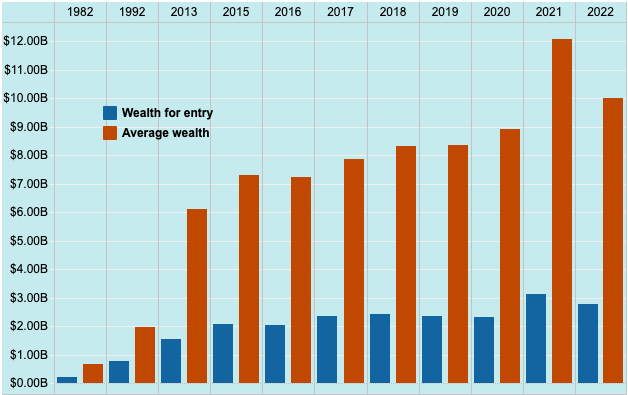
Source: http://www.macrotrends.net (USA)
The Underlying Causes
So, what drives this growing divide? One key factor is wage stagnation; while living costs have soared, wages for the average worker have barely budged in real terms. Tax policies increasingly favor the wealthy, with loopholes and lower rates on investment income playing a significant role.
Globalization and technology have also reshaped the landscape. While they’ve brought benefits, they’ve also contributed to job displacement and a growing skills gap. Those without access to quality education find themselves at a severe disadvantage in the modern economy.
Why It Matters
Wealth inequality isn’t just a moral issue; it has tangible impacts on society’s fabric. It hampers social mobility, making the ‘rags to riches’ story more myth than reality. In a democracy, extreme wealth disparities can lead to disproportionate political influence for the rich, skewing policies in their favor.
Moreover, the psychological impact is profound. Studies show that societies with higher inequality experience higher rates of mental illness, lower life expectancy, and decreased levels of trust and community cooperation.
The Ripple Effects
The consequences extend into various societal realms. In healthcare, for example, the rich can afford cutting-edge treatments while the poor struggle to access basic services. Education, too, is impacted, with children from wealthy families having access to resources that others don’t, perpetuating a cycle of inequality.
Environmentally, wealth inequality contributes to unsustainable consumption patterns. The wealthy’s carbon footprint is vastly larger, yet the consequences are borne disproportionately by the poor.
Possible Solutions and Initiatives
Addressing this issue requires a multi-faceted approach. Progressive taxation, minimum wage adjustments, and reforms in inheritance laws are just the beginning. Education policies that ensure equal opportunities regardless of socio-economic background can help level the playing field.
Initiatives like universal basic income (UBI) trials in some countries have shown promise in reducing poverty and boosting local economies. Additionally, corporate responsibility programs that focus on fair wages and ethical practices contribute to a more equitable distribution of wealth.
Governments, NGOs, and even individual activists play a crucial role. For instance, some European countries have implemented wealth taxes and more stringent financial regulations to curb tax avoidance. These measures, though sometimes controversial, have begun to show positive effects in reducing wealth disparity.
Creating a society for the future
Wealth inequality in Western societies is a complex, multifaceted issue with far-reaching consequences. It’s a challenge that requires not just government intervention, but a shift in how we, as a society, view and handle wealth.
As we ponder on the future we wish to create, it’s worth asking ourselves: what kind of world do we want to live in? One where wealth is hoarded by a few, or a society where prosperity is a shared experience? The actions we take today will shape the answer for generations to come.
 Clinton Cunningham